

Strand Theatre
Also Known As: Strand Arcade, Michigan Theater, Atrium Office Center
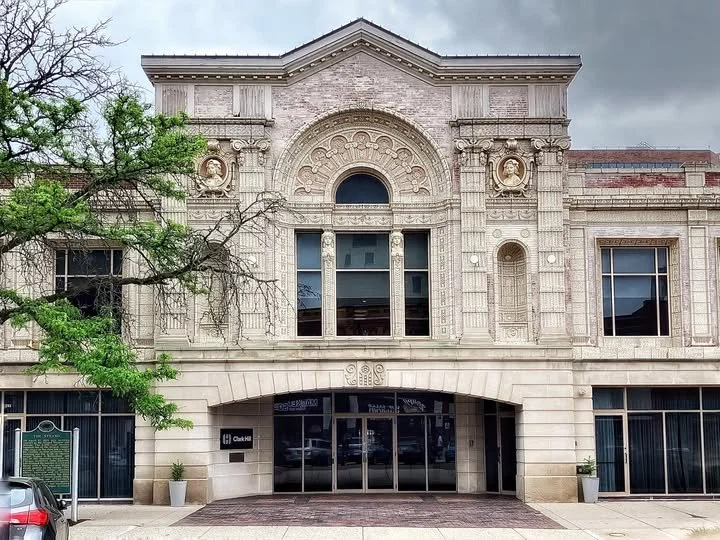
211 S. Washington Square
Lansing, Michigan 48933
Year Built: 1921
Architect: John Eberson
History
The Strand Theatre, later known as the Michigan Theater, was built in 1920 and seated 1,750 theatre goers who would come to see the likes of Harry Houdinu, Al Jolson and Marian Anderson. Motion pictures would follow and in 1941 the building was remodeled adding an Art Deco elements to the façade which were later removed. The theater was demolished in the 1980s and the arcade remains today.
In 1920, W.S. Butterfield commissioned architect John Eberson to design this theater. Construction took place in 1920 and 1921. The theatre originally seated 1750 people for vaudeville and stage shows. The likes of Harry Houdini, Al Jolson, Will Rogers, Marian Anderson, and Bing Crosby passed through the Strand.
By 1922, motion pictures replaced stage productions and the biggest films of the era were shown. The Strand was renamed the Michigan Theater in 1941.
The Michigan closed in 1980 and sat vacant until 1984, when the arcade was renovated into an office and retail complex known as the Atrium Office Center. At this time the theater was demolished from the back of the building, leaving the seating risers as the back roof.
Architecture
The Strand Theatre and Arcade is a large commercial red brick structure containing both a theatre and a two-story arcade. It is decorated with terra cotta, with Art Deco elements from the 1941 remodel. The facade is 109 feet wide, and two stories high, with a three-story gabled block over the center entrance. The entrance leads to a two-story, 20-foot-wide arcade, flanked with shops on the first floor and office space on the second. It is believed the decorative figurines on the façade are modeled after Butterfield’s daughter.