
Knapp’s
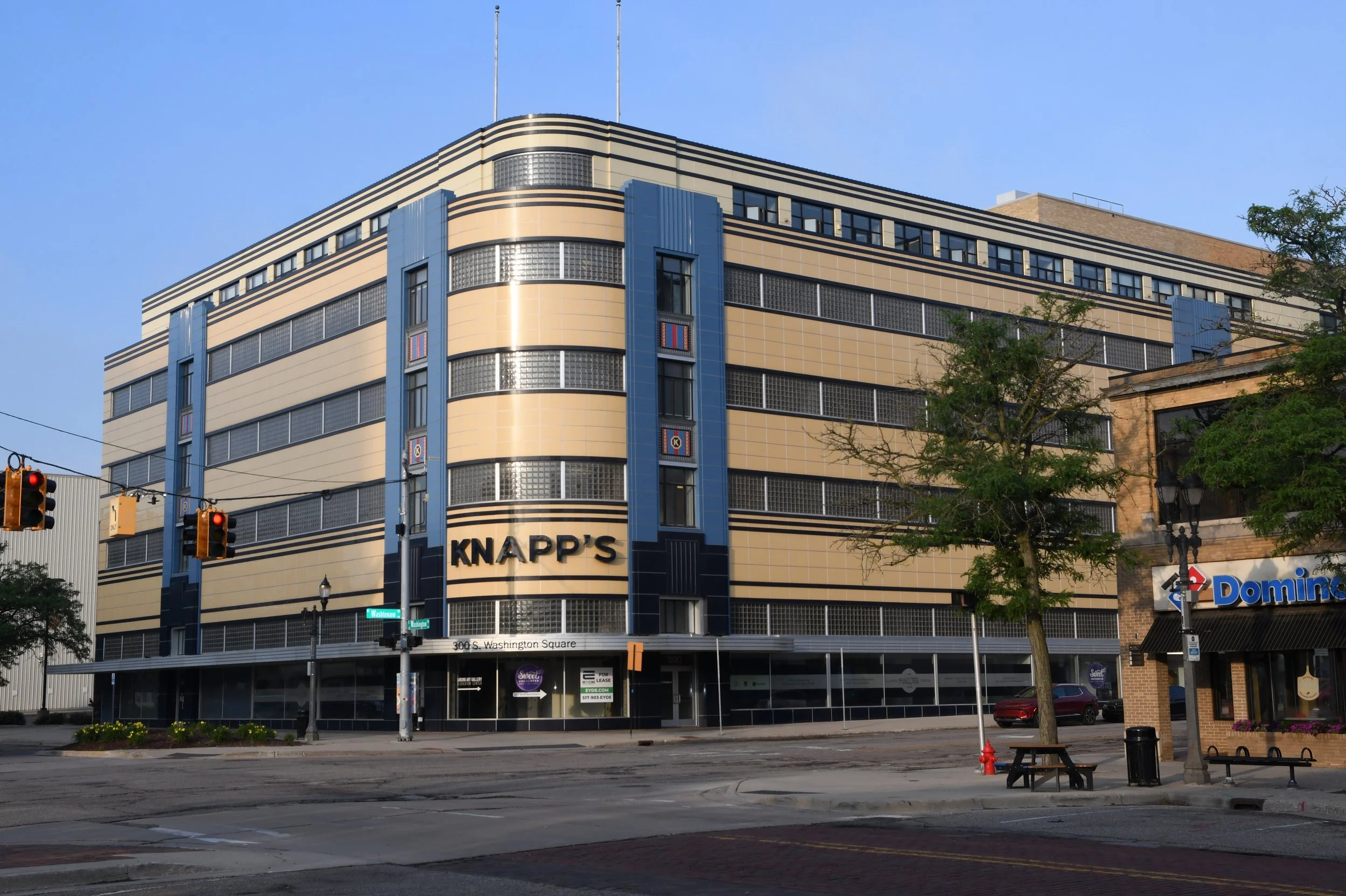
300 South Washington Square
Lansing, Michigan 48933
Year Built: 1937
Architect: Bowd-Munson
History
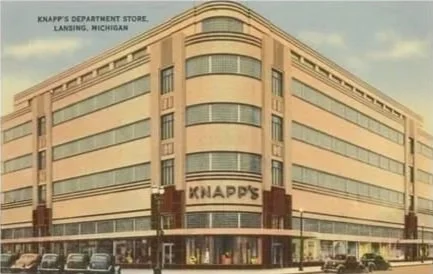
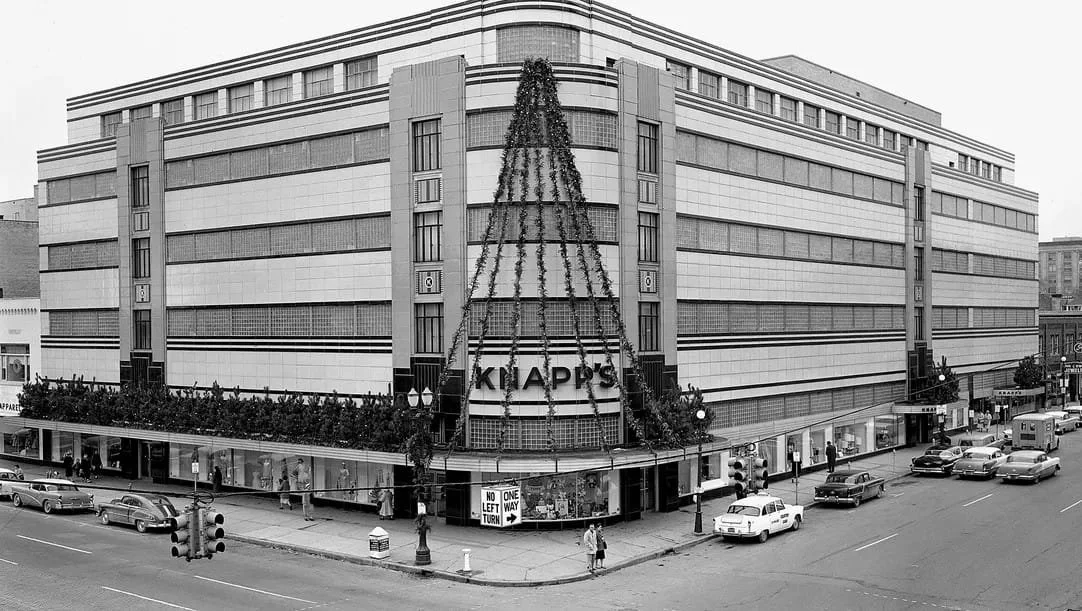
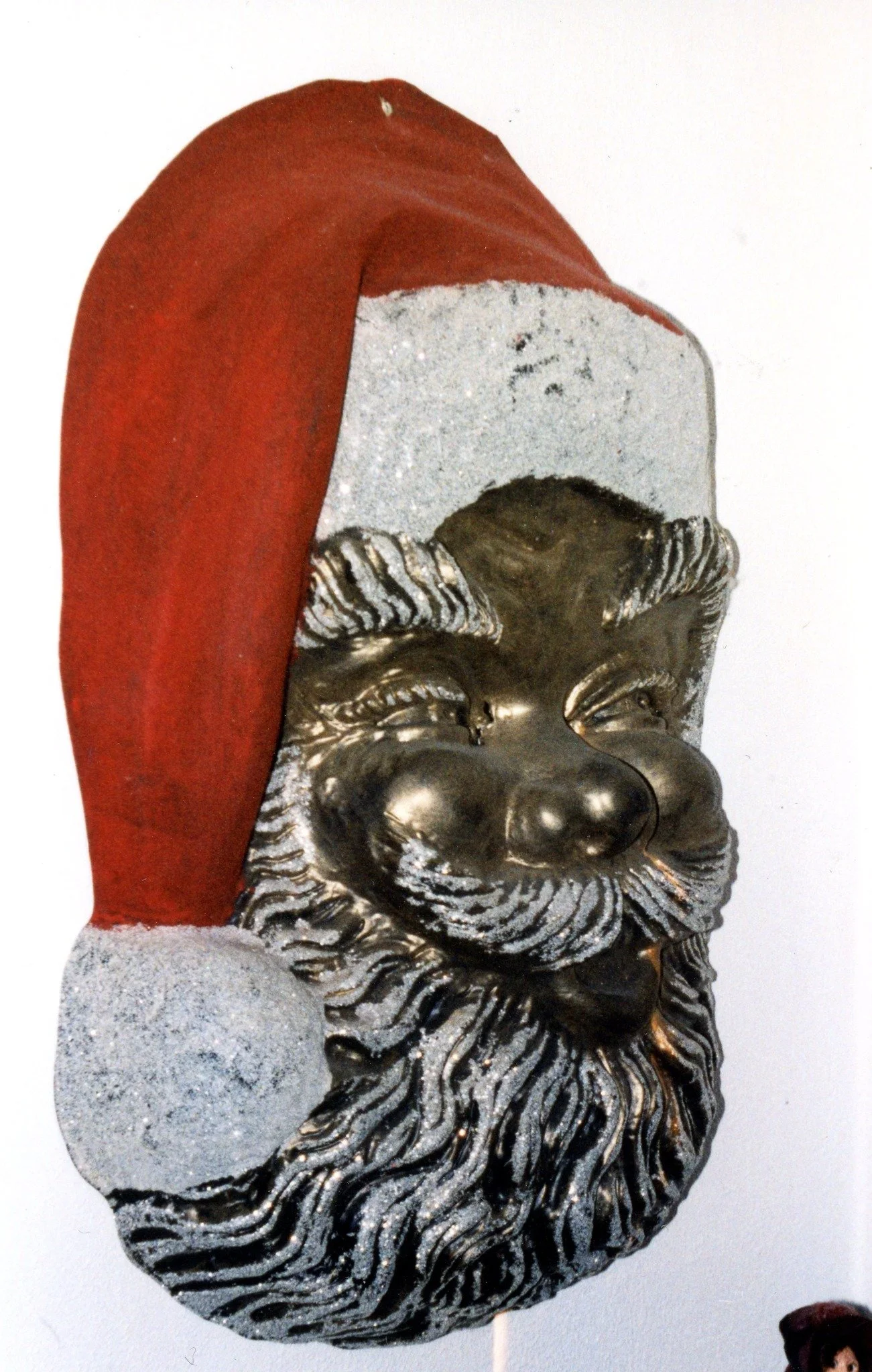
Built in 1937 J.W. Knapps defined the modern department store in Lansing. It’s sleek streamline moderne architecture helped define a growing city. The store closed in 1980 and now is the home to loft living and a collection of upscale restaurants. At Christmas time thousand of children would visit with Santa.
Built in 1937, J.W. Knapp was Lansing’s premier department store for more than four decades. The store featured separate shopping departments for books on the mezzanine and a coffee shop/diner in the basement. Other shopping areas included jewelry, men’s, women’s and children’s fashion and later a home and hardware department. The coffee shops hot fudge sundae is still talked about today.
Even though the department store closed in 1980, the building has been restored to its former glory sans the escalator and is a classic example of Streamline Moderne architecture. The style is noted for its ceramic clad exterior with rounded edges and windows separated by bright chrome.
The store was always decorated to the nines for the holidays especially Christmas. Today, baby boomers have held on to the wonderful pictures of themselves with Santa. The fifth floor held corporate offices, advertising and retail buyers along with window designers. The building has been transformed into a busy commercial center and loft-style apartments. The ground floor will soon be open to a unique collection of restaurants.
The site, itself is pivotal in Lansing history, as the home of the Lansing House Hotel. The hotel, was built in 1865 by General Lafayette Baker, a former spy for the Union Army and one of the men who captured John Wilkes Booth after the assassination of President Lincoln. The Lansing House Hotel was renamed the Hotel Downey in the late 1880s and served as Lansing’s premier luxury hotel, a favorite of state politicians. In 1896, 100 local women met at the hotel to form the Women’s Hospital Association, which would become the Sparrow Health System. The hotel was demolished after a fire and subsequent decline of the hotel in the 1920s and 30s, and the current Knapp Building was built in its place.
Architecture
The architectural firm Bowd-Munson was commissioned to design the new building. Bowd-Munson was one of Lansing’s most significant architectural firms from 1929 through the 1940s, designing the Federal Building, the Ottawa Street Power Station and the Masonic Temple Building in Lansing. They also designed the Spartan Stadium, Jenison Fieldhouse, and Berkey Hall on the MSU Campus.
The Streamline Modern style was popular during this period as a way to incorporate new technologies like electric lighting and show off sleek modernization. The building and site were placed on the National Register of Historic Places in 1983 and declared a Historic District in 2011 by the State Historic Preservation Review Board and the City of Lansing.